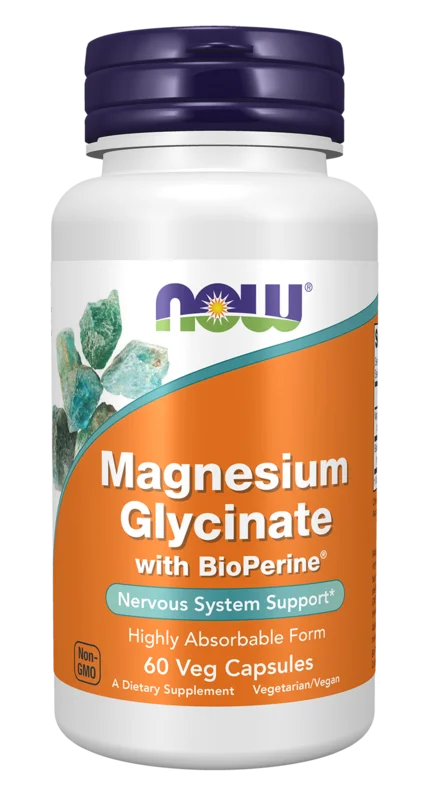
NOW Foods Magnesium Glycinate
This is a single-ingredient magnesium supplement built on the bisglycinate form — magnesium bound to the amino acid glycine, a pairing many people find gentler on the stomach than cheaper mineral salts. The label sticks to standard structure/function wording about supporting normal muscle, nerve, and heart activity. That phrasing sits inside a legal category U.S. supplement rules allow for describing an ordinary nutrient's role in the body; it is not a claim about treating any condition.
The number that actually matters here is the one many magnesium brands bury. The front panel lists 2,000mg of magnesium bisglycinate, but that figure is the weight of the whole compound — mineral plus the glycine it's attached to — not the amount your body can use. NOW Foods also prints the elemental total on the same panel: 200mg, or 48% of the Daily Value per two-tablet serving. We'd flag any magnesium product that only shows the compound weight and hides that second number; here it's sitting right next to it.
How that lines up with the RDA
The NIH Office of Dietary Supplements puts the adult target at roughly 400–420mg a day for men and 310–320mg for women, counting everything from food as well. Two tablets of this product supply a meaningful share of that but are sized to top up a diet's magnesium gap, not to stand in for it entirely.
What's certified, and what isn't
On the manufacturing side, NOW holds an NPA A-rated GMP certification and runs its own ISO/IEC-accredited testing labs rather than outsourcing that work — solid credentials at the facility level. What we couldn't confirm is a third-party seal on this specific SKU, such as NSF Certified for Sport or USP Verified. A facility certification and a per-bottle product seal are two separate claims, and only the first one checks out for this listing.
| Elemental magnesium | 200mg (48% DV) |
| Compound form | Magnesium bisglycinate |
| Serving size | 2 tablets |
Who should check with a doctor first
If you're on a loop or thiazide diuretic, know that those medications gradually deplete the body's magnesium over time, which changes how a supplement like this fits into your routine. Anyone managing kidney disease should also talk to a doctor before adding magnesium, since impaired kidneys handle mineral supplementation differently. Separately, large magnesium doses can interfere with how the body absorbs certain antibiotics and osteoporosis medications if taken at the same time — spacing doses apart, or checking with a pharmacist, avoids that overlap.
Where to look for it
Nothing here reads as overstated to us, and the elemental-dose math checks out, so this is one we're comfortable pointing to.
See it on Amazon →VitaNews Daily is reader-supported: we link to authorized retailers and may earn a commission at no extra cost to you when you buy through links on this page.
These statements have not been evaluated by the FDA. This product is not intended to diagnose, treat, cure, or prevent any disease. Talk to a healthcare provider before starting any new supplement, especially if you take prescription medication or manage an existing health condition.
Sources: NIH Office of Dietary Supplements, Magnesium Fact Sheet for Health Professionals (RDA figures); NOW Foods company and product information.