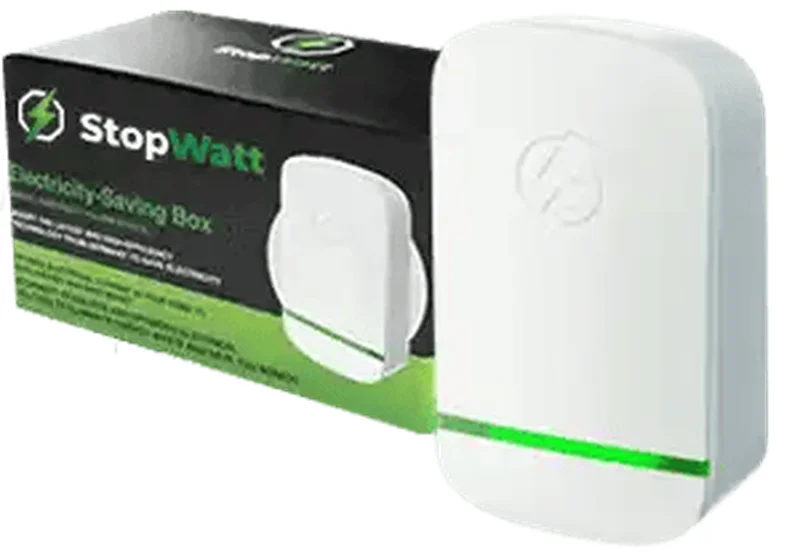
StopWatt
StopWatt is a small device that plugs directly into a wall outlet and is marketed as a whole-home "electricity stabilizer" that lowers your power bill. After looking into how it's sold and how this category of device actually works, we're not linking you to it — here's why, and what we'd get instead.
What the Manufacturer Claims
On its own sales page, the maker says StopWatt "stabilizes electrical current," "reduces dirty electricity," provides "on-the-spot reactive power compensation," and "absorbs harmonic waves" — adding that it helps "dramatically lower energy consumption." The listing also describes the device as approved for use in all 50 states without naming which agency issued that approval, and we couldn't locate one ourselves.
What This Class of Device Actually Does
Stripped of the marketing language, a device built around "reactive power compensation" and "harmonic filtering" is generally a small power-factor-correction capacitor — a real and long-established piece of electrical engineering. The catch is that this technology matters most for large industrial or commercial sites running heavy motor loads. Residential electric meters in the U.S. almost universally bill households for real power, measured in kWh, not the reactive power this category of product targets. That means a device like this typically has little to no measurable effect on a home electric bill, regardless of how effectively it filters electrical noise. We're describing the general mechanism this product category relies on, not a lab test of this specific unit.
A Regulatory History Worth Knowing
The Federal Trade Commission has had a standing rule on energy-saving device claims since 1979, stating that it is an unfair or deceptive practice to represent expected energy savings when consumers won't ordinarily realize them. Over the decades since, the agency has brought multiple enforcement actions against plug-in and add-on "energy saving" devices sold on similar premises. That history concerns the product category broadly — it isn't a claim we're making about this specific manufacturer.
Red Flags on the Sales Page Itself
Beyond the physics question, a few things on the manufacturer's own site gave us pause. No physical company address appears anywhere on it — only a support email. The page displays a countdown-style "expires at midnight" discount that resets and behaves like a permanent fixture rather than a real, one-time deadline. And the customer testimonials cite specific dollar-amount savings without disclosing any methodology for how those numbers were measured or whether they're representative. None of this proves the product doesn't work, but together it's enough that we can't verify the manufacturer's claims, and we found no non-manufacturer testing that could.
Our Take
We can't confirm StopWatt's savings claims, its "50-state approval" language, or the identity of the company standing behind it, and the underlying mechanism it advertises typically isn't the kind of power a home meter bills for in the first place. Because of that combination, we're not providing a purchase link to StopWatt on this page. If your actual goal is understanding — or eventually lowering — your real electricity usage, the option below measures that honestly instead.
Why There's No Buy Link Here
We link to products we can stand behind. Given the undisclosed company address, the absence of any independent testing, and a savings mechanism that doesn't match how home electricity is actually billed, StopWatt doesn't clear that bar for us.
What We'd Get Instead
A plug-in electricity usage meter won't lower your bill by itself, but it tells you the truth about what your appliances actually draw — real kWh, volts, amps, and cost over time — so you can decide what's worth unplugging or replacing. The P3 International Kill A Watt is the long-running, widely-referenced option in that category.
Clicking through opens a live Amazon search for this exact product, not a single listing we control, so you can compare current sellers and prices yourself. As an Amazon Associate, we earn from qualifying purchases.
See the Kill A Watt Meter on AmazonSpecifications and claims described above for StopWatt are as disclosed by its manufacturer's own marketing materials; we have not independently tested the device.
This page reflects our own research as of publication; individual results and outcomes for any product mentioned may vary.
As an Amazon Associate, VitaNews Daily earns from qualifying purchases on the linked alternative product above.